
In line with the government’s commitment to decarbonisation and our ambition for a net-zero carbon passenger railway, we propose to electrify the railway through the use of overhead lines which would provide power to the trains. We confirmed in November 2025 that we’ve decided to use a system known as ‘discontinuous electrification’.
Discontinuous electrification would mean overhead lines would only need to be installed along some sections of the route, meaning less construction would be required. Passenger trains would be powered by onboard batteries along other sections. This approach provides a lower cost solution to delivering the EWR benefits than full electrification at this time.
The system is designed to ensure that trains have enough power to complete their journeys if, for example, there are delays to the service or there is a power outage in a section of the route. It also means trains can keep operating if something unexpected happens on the line, such as a short power cut, because they can switch to using their onboard batteries.
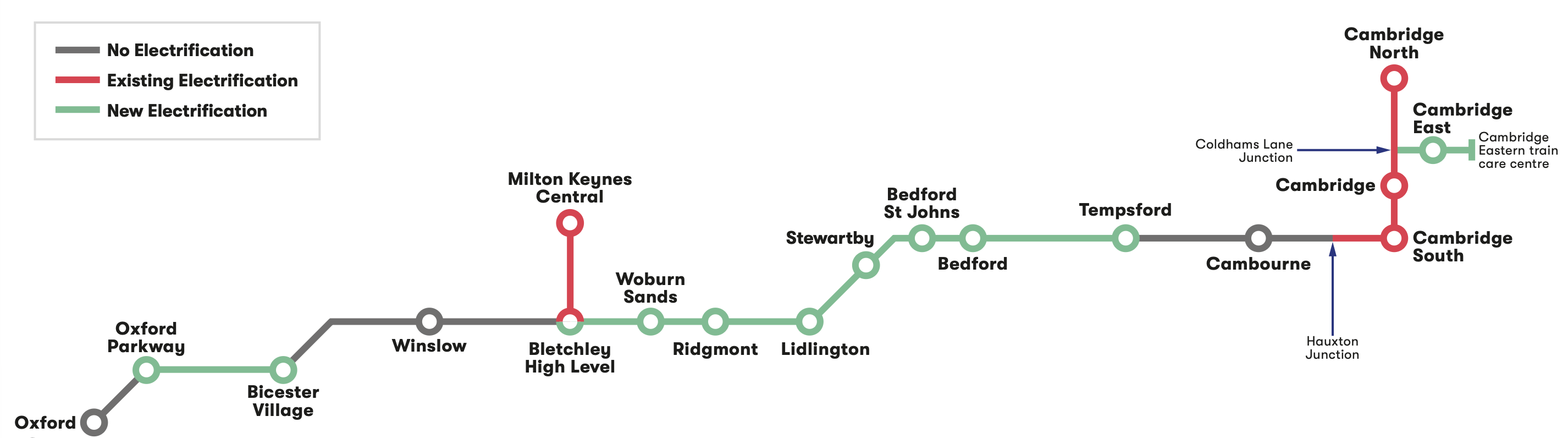
The image to the right indicates the sections of the route where we’re currently considering overhead electrification.
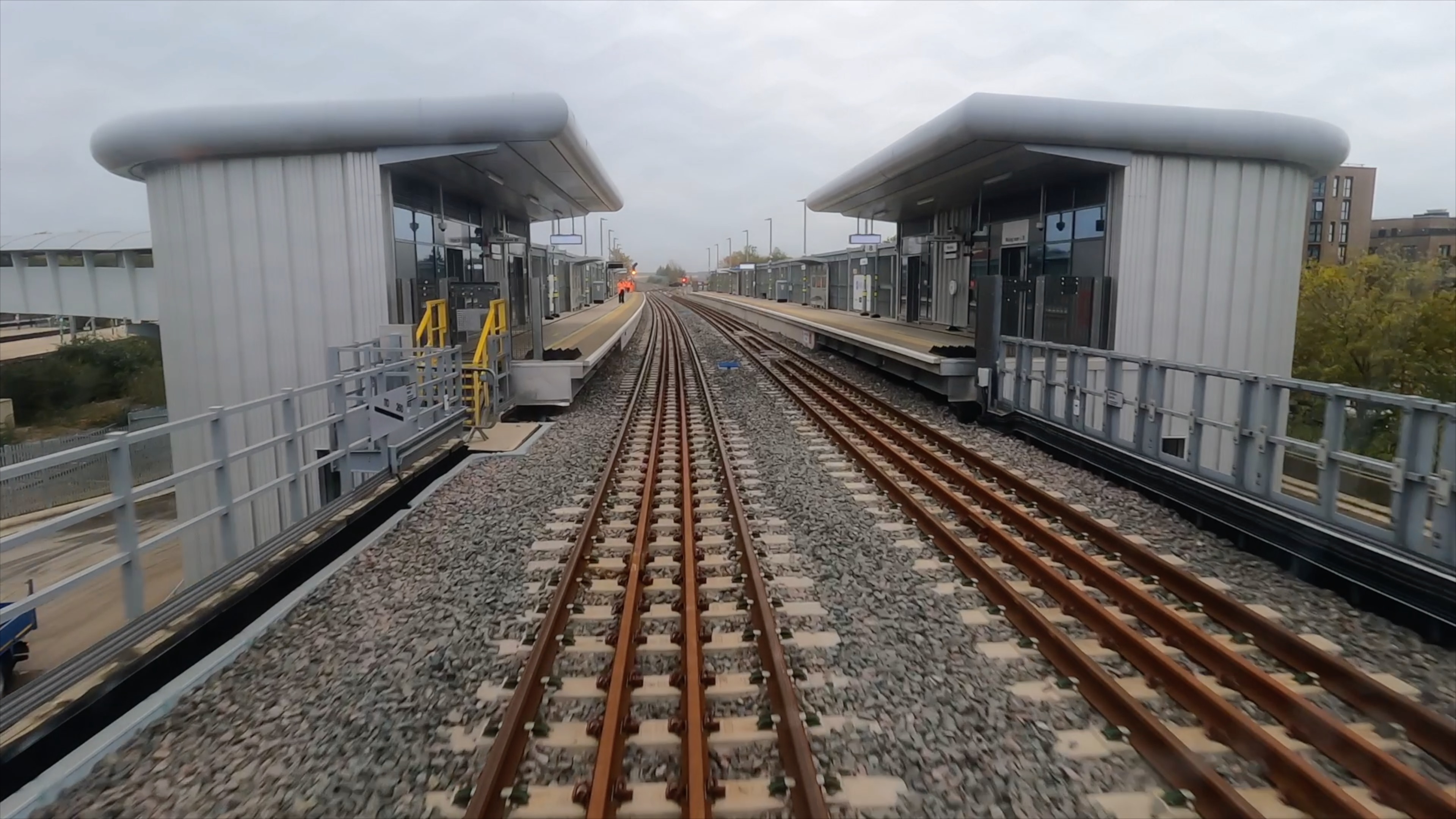
Our designs would not preclude full electrification across the route in the future. For example, we’re designing new bridges with decks that are high enough for overhead lines to be installed underneath at a later date if required. We’ve also identified land for potential utility diversions on sections of the route which may not be electrified and are continuing to explore whether these are still required.
Overhead line equipment may need to extend for a short distance beyond some stations to enable trains to switch between power from the overhead lines and the onboard batteries. Tracks within train depots would also be electrified so that train batteries could be charged overnight. The Shepreth branch line, in the Comberton to Shelford route section, the West Coast Main Line and West Anglia Main Line are already electrified.
East West Rail - Our approach to powering EWR trains
Hybrid battery-electric trains
Hybrid battery-electric trains would use the discontinuous electrification system, which is a relatively new form of technology. Because of this, we’re carrying out additional work to confirm whether our current preference for discontinuous electrification needs further refinement, and the extent of electrification required, particularly in sections of the route that would use the existing rail corridor.
To help local communities experience the benefits EWR would deliver as quickly as possible, we’re introducing some services earlier, instead of waiting to be able to provide discontinuous electrification. This means that diesel passenger trains will be used temporarily between Oxford and Bletchley/Milton Keynes until the required overhead electrification has been installed and we have procured our full fleet of battery electric trains which will operate on the full line once complete.
The same approach is likely to be needed for the service between Oxford and Bedford which will begin services before the new railway between Bedford and Cambridge, including the overhead electric line system, is complete. Procurement of our train fleet is currently in progress and is being led by the Department for Transport.
This is a temporary solution which would enable passenger services to operate as and when sections of the route are built, taking more cars off local roads sooner and helping to deliver public transport solutions to connect communities quicker.