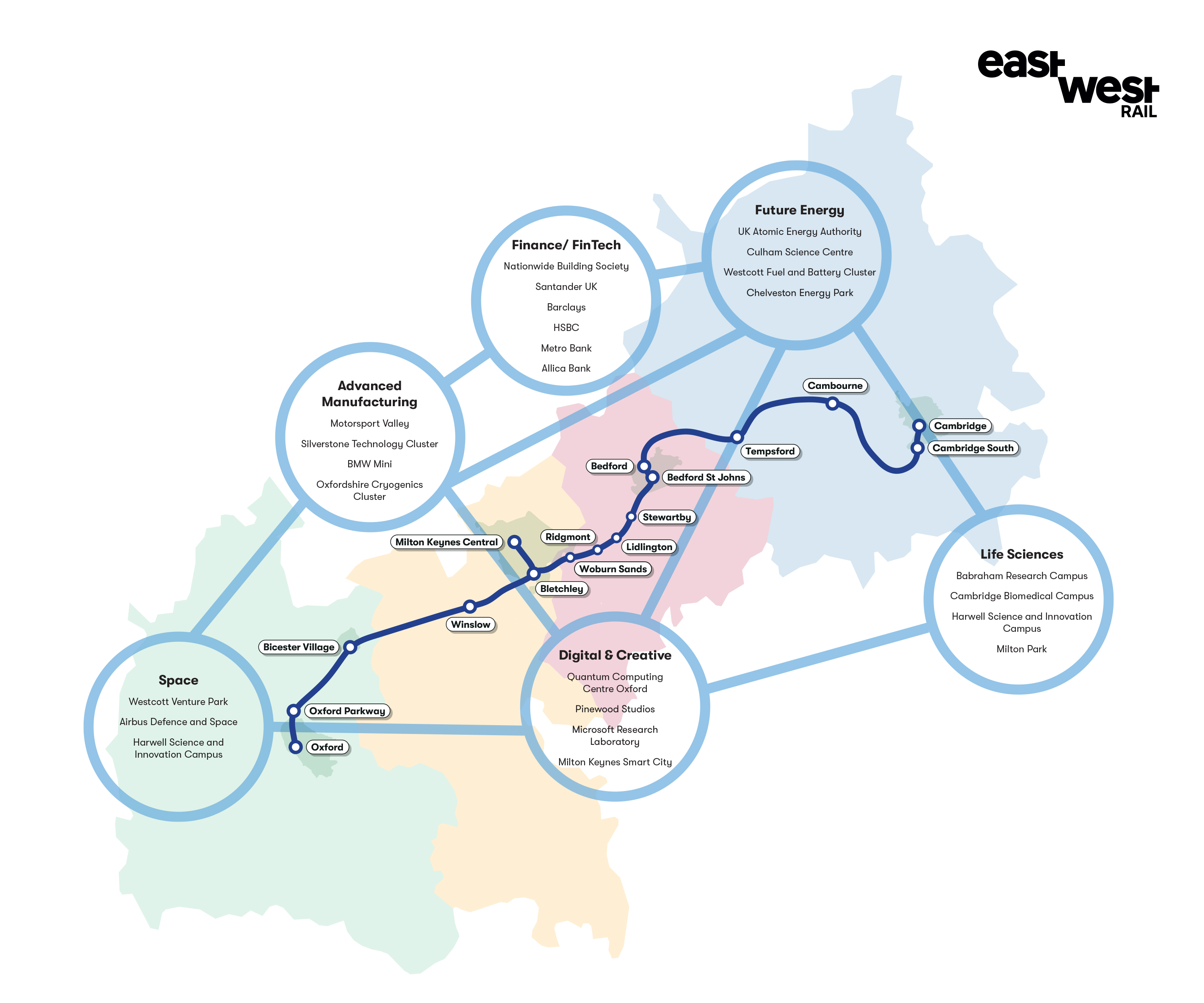
Creating a better‑connected future for the region
East West Rail will connect one of the UK’s most productive regions – cutting journey times, easing congestion, supporting much‑needed homes, strengthening freight links and enabling the UK to compete globally. It’s a practical, sustainable upgrade that helps people reach what matters today while supporting long‑term national growth.
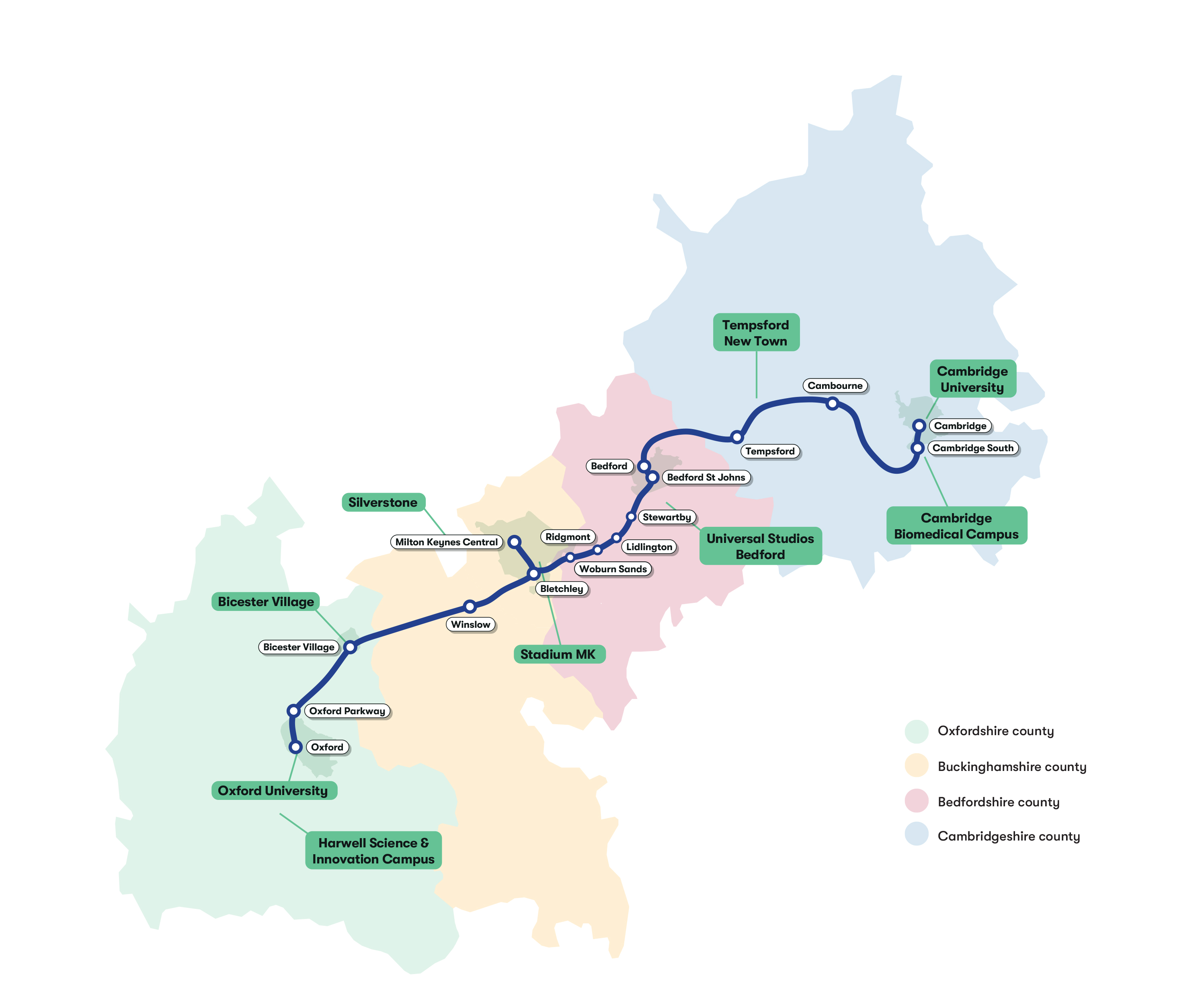
The Oxford–Cambridge region is already a globally significant centre of science, technology and advanced manufacturing. Anchored by two world‑leading universities, it contributes over £143bn annually to the UK economy and supports more than two million jobs. But limited east–west connectivity is holding the region back from reaching its potential. East West Rail is the opportunity to fix that.
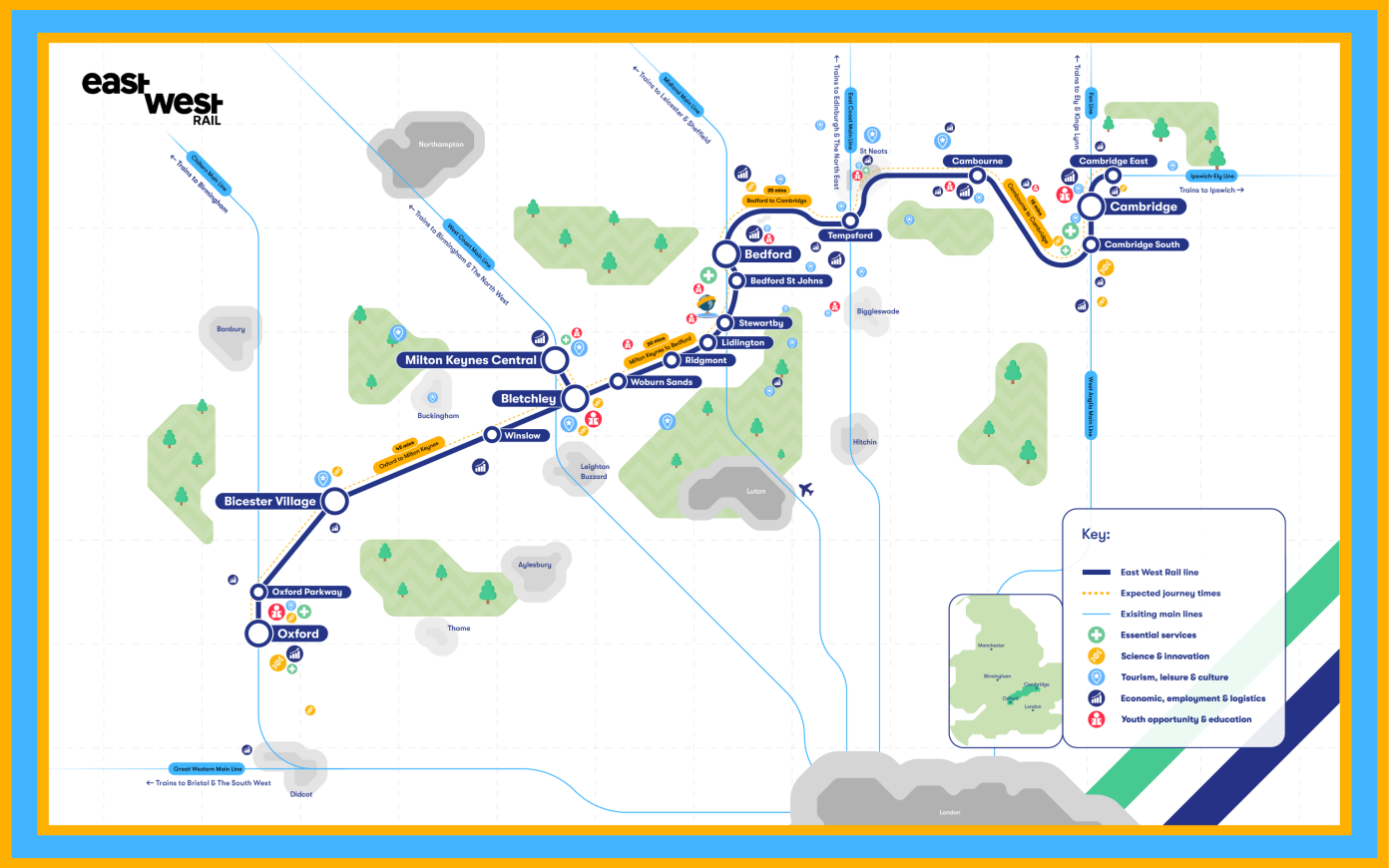
What EWR will do
-
Connect communities with faster, more direct east–west rail links.
-
Expand access to jobs and skills.
-
Support investment and growth along the corridor.
-
Offer a sustainable alternative to road travel.
-
Strengthen freight movements and supply chain resilience.
-
Improve connections to major north–south rail lines.
-
Support housing growth in well‑connected, sustainable locations.
Documents
-
The case for EWR one pager
Driving economic growth
The region has a strong and growing track record:
-
Oxford hosts western Europe’s highest concentration of science research facilities.
-
Milton Keynes is among the UK’s fastest‑growing and most productive cities.
-
Bedford continues to grow, with over 1,700 new businesses established in 2024 alone.
-
Cambridge is home to 5,000+ high‑tech firms employing around 60,000 people.
However, limited connectivity restricts access to talent and collaboration, raising business costs and making it harder to retain high‑growth firms. Major private investments – such as the proposed Universal Studios resort near Bedford – further highlight the need for stronger transport links.
EWR connects established innovation centres with emerging hubs like Tempsford and Cambourne, expanding the labour market and strengthening productivity.
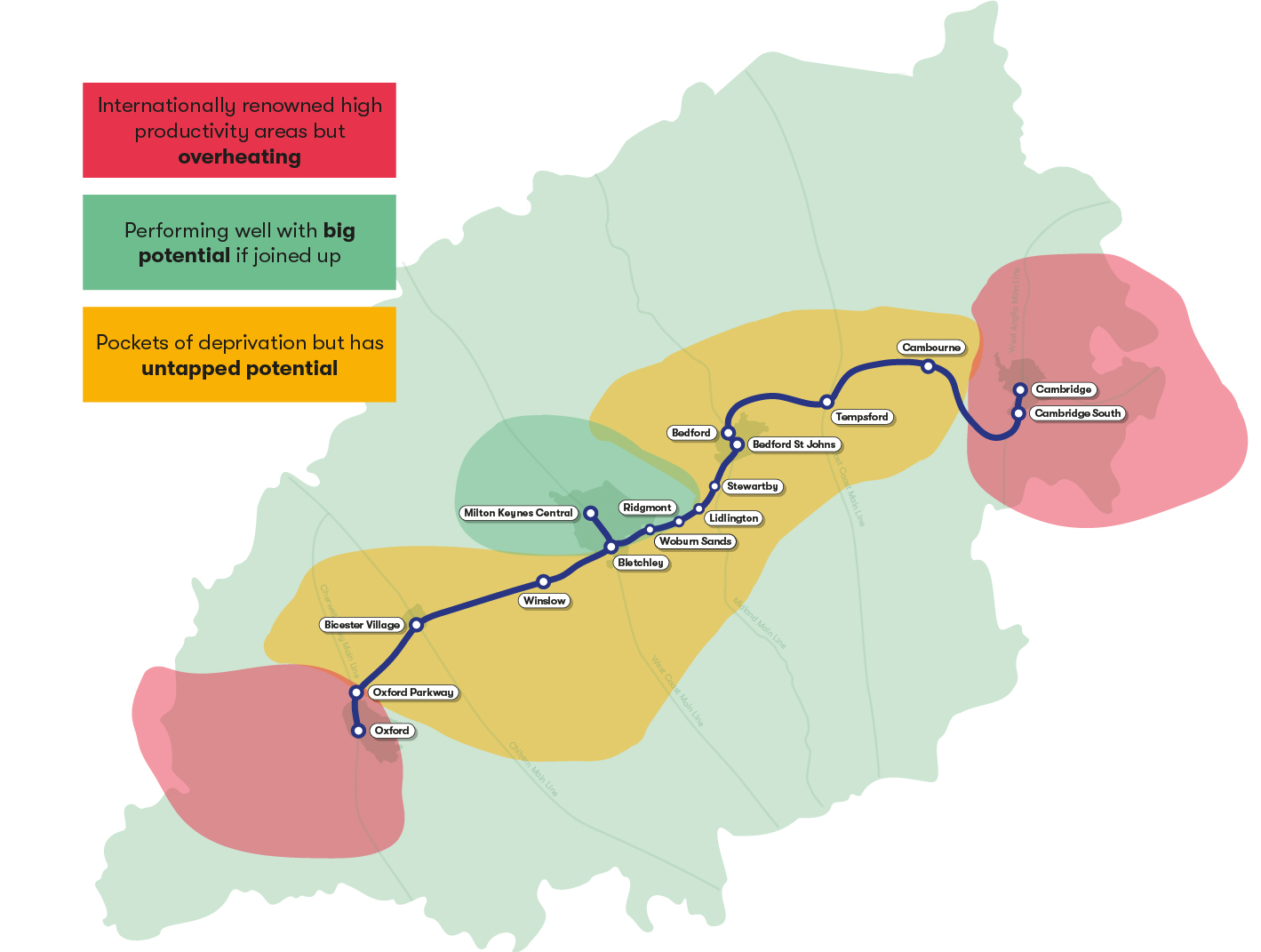
Closing the connectivity gap
Without an east–west corridor, the region relies heavily on congested roads. This limits labour mobility, slows collaboration and reduces supply chain efficiency.
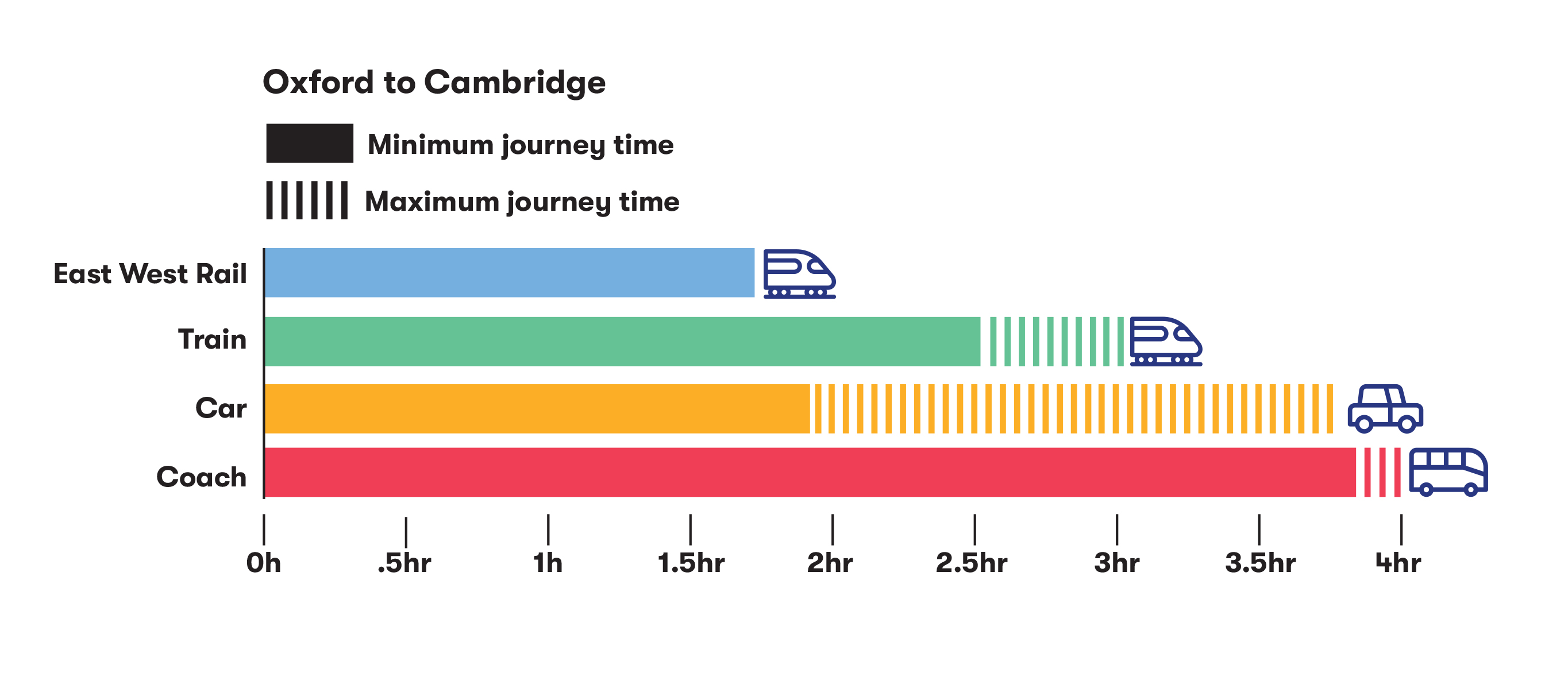
EWR will provide a modern, reliable railway between Oxford and Cambridge in under 100 minutes, helping to:
-
Expand access to higher‑value employment
-
Strengthen business collaboration
-
Improve supply chain efficiency
-
Increase the region’s attractiveness to global investors and skilled workers
-
Support rail freight and reduce HGV traffic
Better transport choices
EWR will move people at peak times on a scale that roads cannot accommodate. Shorter, more reliable journeys – such as Cambourne–Cambridge in around 15 minutes – will transform access to jobs, education and services.
Shifting trips from road to rail will:
-
Ease congestion on busy corridors
-
Improve journey time reliability for those who still drive
-
Cut emissions and support national decarbonisation goals
The railway will use discontinuous electrification and battery‑electric trains, with new and upgraded stations designed to support walking, wheeling, cycling and bus connections.
Safer journeys across the region
Road collisions remain a significant issue, with 7,365 casualties and 119 fatalities across the region in 2024. By offering a safe, attractive alternative to driving, EWR can help reduce traffic volumes, easing pressure on key corridors and supporting safer journeys for communities.
A strategic intervention for national growth
EWR creates a single economic area of four million people, unlocking land for research space and homes, supporting nationally significant private investment and strengthening supply chains. With six interchange points, it links directly into growth clusters across the North West, Midlands and South West.
Additional east–west freight capacity relieves pressure on constrained corridors through north London, supporting ports, distribution centres and manufacturers nationwide.
Community benefits
Housing costs in the region are among the highest in the UK. Oxford’s prices are 12.5 times average salaries, while Cambridge’s average exceeds £485,000. This limits affordability, constrains labour supply and increases commuting pressures.
EWR supports growth of up to 100,000 new homes in well‑connected locations – aligning housing with employment centres and reducing reliance on cars. Better connectivity will expand access to jobs, education and healthcare, supporting social mobility in places like Bedford.
Securing national competitiveness
The region’s transport network has not kept pace with its growth. Without stronger east–west links, congestion, housing pressures and barriers to investment will worsen.
The Oxford–Cambridge corridor brings together world‑class research, venture capital and industrial capability. Oxford and Cambridge account for nearly one in five UK university spinouts since 2011. To remain globally competitive, the region needs transport infrastructure that supports its scale.
EWR connects labour markets, strengthens supply chains and provides critical freight capacity — helping the UK retain and attract high‑growth firms.